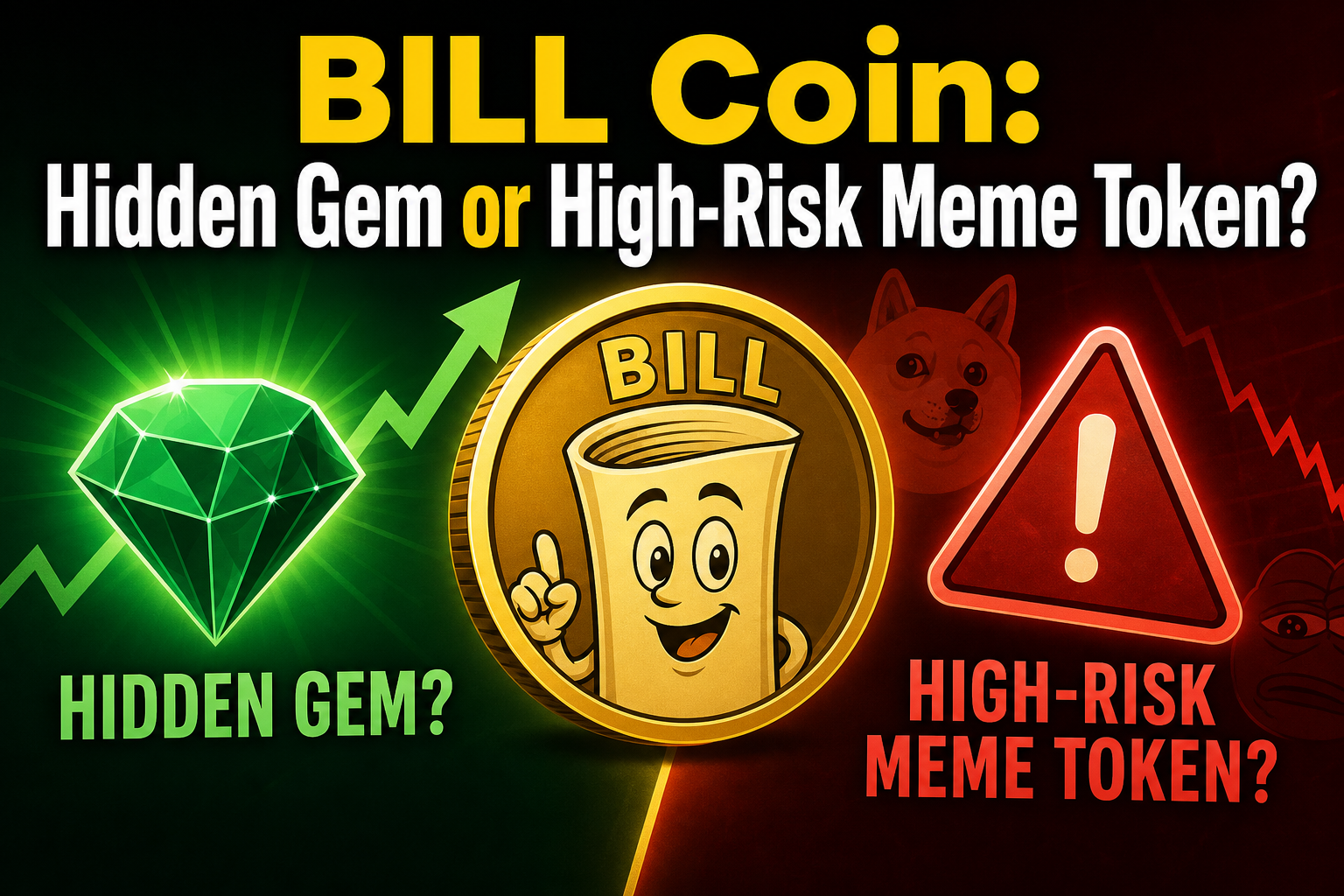
BILL Coin Analysis: Is BILL a Hidden Altcoin Opportunity or a High-Risk Meme Token?

SEO Title: BILL Coin Price Outlook: Is BILL Crypto Worth Watching in 2026?
Meta Description: A detailed BILL coin analysis covering its use case, risks, price drivers, meme-coin potential, liquidity concerns, and whether BILL could survive long term.
Keywords: BILL coin, BILL crypto, BILL token analysis, BILL price prediction, BILL altcoin, BILL meme coin, is BILL coin a good investment
The altcoin market is once again attracting attention as investors search for the next small-cap token that could deliver explosive returns. One name that has appeared in crypto discussions is BILL, a ticker used by several small-cap or meme-oriented crypto projects.
But is BILL coin a serious altcoin with long-term potential, or is it simply another speculative meme token driven by hype, community activity, and short-term liquidity?
The answer is not simple. Like many low-market-cap cryptocurrencies, BILL can move sharply in either direction. It may offer high upside during a meme-coin cycle, but it also carries major risks, including weak utility, low liquidity, unclear tokenomics, and the possibility of copycat scams.
Let’s break it down.
◆ What Is BILL Coin? Understanding the Token Before Investing
Before analyzing BILL, investors need to understand one important point: “BILL” is not a unique ticker in crypto. Multiple tokens can use the same symbol across different blockchains, especially on decentralized exchanges.
That means anyone researching BILL should first confirm:
- The official contract address
- The blockchain network
- The project’s official website
- Verified social media accounts
- Liquidity pool information
- Token supply and holder distribution
- Whether the contract has been audited
This is especially important because meme coins and micro-cap tokens often attract fake copies. Buying the wrong BILL token could mean purchasing an unrelated or even malicious asset.
In most cases, BILL appears to fall into the category of a community-driven or meme-style altcoin rather than a large infrastructure project like Ethereum, Solana, or Chainlink. This does not automatically make it bad, but it changes how investors should evaluate it.
For a meme or community token, the most important factors are usually:
- Community strength
- Social media momentum
- Liquidity depth
- Exchange listings
- Token distribution
- Narrative strength
- Developer transparency
Unlike fundamentally driven Layer-1 or DeFi projects, meme tokens often rise because of attention, not revenue.
◆ Is BILL Coin Useful? The Biggest Question for Long-Term Value
One of the biggest criticisms against many small-cap altcoins is that they lack real utility. The same question must be asked about BILL:
What does BILL actually do?
If BILL is mainly a meme coin, its value may depend heavily on community interest rather than practical use. That can still create strong price movements, especially during bullish meme-coin seasons. However, it also means the token may struggle when market attention fades.
A strong altcoin usually has at least one of the following:
- A working product
- Clear token utility
- Real protocol revenue
- Strong developer activity
- Strategic partnerships
- Exchange adoption
- Ecosystem demand
If BILL does not have these, then investors should treat it as a high-risk speculative asset, not a fundamentally proven project.
That does not mean BILL cannot rise. Many meme coins have experienced major rallies despite limited utility. But those rallies are usually driven by psychology, virality, and liquidity rather than long-term adoption.
In other words, BILL may perform well if the market enters another strong meme-coin cycle. But without deeper utility, its downside risk remains significant.
◆ BILL Coin and Market Volatility: Why Small Altcoins Move So Fast
Small-cap altcoins like BILL are extremely sensitive to market conditions. When Bitcoin is strong and liquidity flows into risk assets, speculative tokens can rise quickly. But when Bitcoin pulls back or risk sentiment weakens, smaller tokens often fall much harder.
This happens for several reasons.
First, low-cap tokens usually have thinner liquidity. That means a relatively small buy or sell order can create a large price movement.
Second, many holders are short-term traders. If momentum slows, they may sell quickly and move to the next trending coin.
Third, meme coins depend heavily on attention. If social media activity drops, the price can lose support.
Fourth, whale wallets can have a major impact. If a few large holders control a large percentage of the supply, one big sell order can trigger panic.
For BILL, these factors are especially important. Before investing, traders should check:
- Is liquidity locked?
- How many wallets hold the token?
- What percentage is held by top wallets?
- Are there large developer wallets?
- Is trading volume organic or artificial?
- Is the token listed on centralized exchanges or only DEXs?
If BILL has low liquidity and concentrated ownership, it could be highly vulnerable to sharp crashes.
◆ Could BILL Coin Rally? The Bullish Scenario
Despite the risks, there is a possible bullish case for BILL.
In crypto, small meme-style tokens can rise dramatically when they capture the right narrative. If BILL develops a strong community, gains social media traction, and secures more exchange visibility, it could attract speculative capital.
The bullish scenario for BILL would likely require several conditions:
1. Strong Community Growth
Meme coins live and die by community strength. A growing, active, and loyal community can help create visibility on platforms like X, Telegram, Discord, and Reddit.
2. Increased Trading Volume
Volume is a key signal. If BILL begins to see rising daily trading activity, it may indicate growing market interest.
3. Better Exchange Access
Listings on larger decentralized or centralized exchanges can improve liquidity and credibility. Even smaller CEX listings can sometimes trigger short-term rallies.
4. Clearer Branding or Narrative
Successful meme coins usually have a simple and repeatable story. If BILL can create a recognizable narrative, it may gain more attention.
5. Favorable Altcoin Market Conditions
BILL is unlikely to perform well in isolation if the broader altcoin market is weak. For high-risk tokens, Bitcoin stability and altcoin liquidity are extremely important.
If these factors align, BILL could experience a speculative rally. However, this would likely be momentum-driven rather than fundamentally guaranteed.
◆ The Bearish Scenario: Could BILL Coin Go to Zero?
The uncomfortable truth is that many small altcoins eventually fade away. BILL is not exempt from this risk.
A token can trend for a short period and then lose most of its value if attention moves elsewhere. This is common in the meme-coin sector.
The bearish case for BILL includes:
- No clear use case
- Weak or inactive development team
- Declining community engagement
- Low liquidity
- High whale concentration
- Lack of exchange listings
- Copycat token confusion
- No transparent roadmap
- Broader crypto market downturn
If BILL fails to maintain attention or build a meaningful ecosystem, its price could decline sharply. In the worst case, liquidity could dry up and the token could become nearly untradeable.
This is why investors should never treat small-cap meme tokens as “safe” investments. The upside can be large, but the downside can be close to total loss.
◆ BILL Coin Price Prediction: What Investors Should Watch
Making a precise BILL price prediction is difficult without verified real-time market data, contract information, and current liquidity metrics. However, investors can monitor several key indicators to judge whether BILL is gaining or losing momentum.
Bullish Signals
- Rising trading volume
- More holders over time
- Increasing social media mentions
- Better liquidity depth
- New exchange listings
- Transparent team updates
- Reduced whale concentration
- Consistent community activity
Bearish Signals
- Falling volume
- Large wallet sell-offs
- Inactive social media channels
- No roadmap execution
- Liquidity removal
- Contract ownership concerns
- Fake partnerships or misleading marketing
- Too many copycat BILL tokens
For small altcoins, price action alone is not enough. A sudden pump can look attractive, but if liquidity is weak, it may be difficult to exit safely.
◆ How to Research BILL Coin Safely
Before buying BILL, investors should follow a strict checklist.
1. Confirm the Official Contract Address
Never buy based only on the ticker symbol. Search through official project channels and verify the contract address.
2. Check Liquidity
Look at the liquidity pool size. A token with very low liquidity can be extremely risky.
3. Review Holder Distribution
If the top 10 wallets hold a large percentage of the supply, the token may be vulnerable to whale manipulation.
4. Examine the Contract
Check whether the contract has suspicious functions, such as trading restrictions, blacklist functions, or high tax mechanisms.
5. Look for Audit Information
An audit does not guarantee safety, but no audit at all increases risk.
6. Analyze Community Quality
Avoid projects where engagement looks fake, botted, or overly promotional.
7. Be Careful With “Guaranteed” Price Claims
Any project promising certain returns should be treated with caution.
◆ Final Verdict: Is BILL Coin Worth Watching?
BILL is the type of altcoin that may attract traders looking for high-risk, high-reward opportunities. If it gains community momentum and benefits from a broader meme-coin cycle, it could see strong short-term upside.
However, investors should be realistic. BILL also carries major risks, especially if it lacks strong utility, transparent development, deep liquidity, and verified tokenomics.
The most important takeaway is this:
BILL may be worth watching as a speculative altcoin, but it should not be treated as a low-risk investment.
For cautious investors, the best approach is to research the exact BILL token carefully, verify the contract address, study liquidity conditions, and avoid investing more than they can afford to lose.
In the altcoin market, hype can create opportunity — but it can also disappear very quickly.
